South America · Culture
Yurimagua
Yurimagua (upper Amazon)
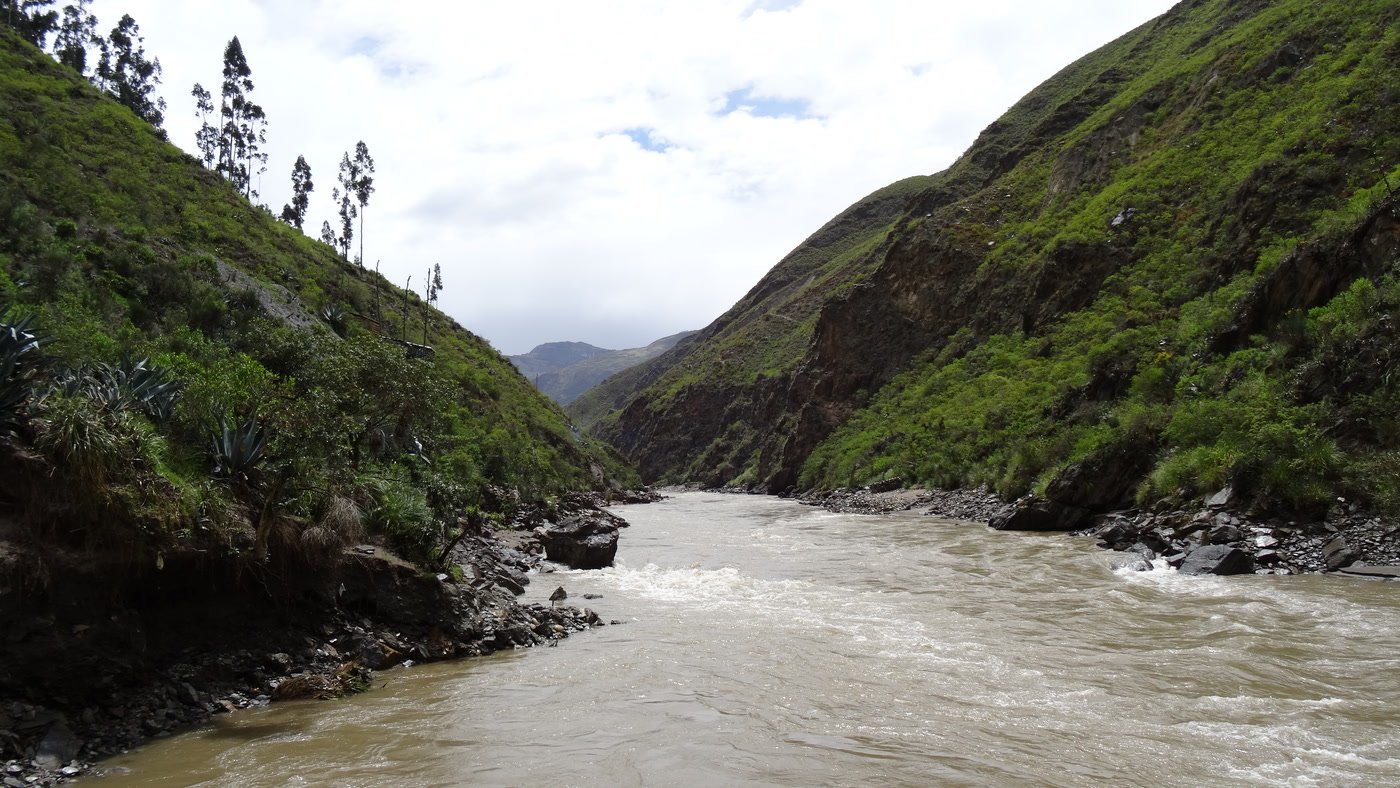
The Río Marañón of the upper Amazon — the country of the Yurimagua, whose fungal inebriant survives in a single colonial report. — Photo: Waterloo1883 · CC BY-SA 4.0 · Source
The Amazon’s missing mushrooms
The great puzzle of South America is how little evidence there is for psychoactive mushroom use, in a continent overflowing with other visionary plants — ayahuasca, San Pedro, tobacco, snuffs. The Yurimagua report is the exception that proves how thin the record is. A late-colonial Jesuit account describes this upper-Amazon people becoming intoxicated on a fermented drink made with a “tree fungus.”1
A fragile trace
That is very nearly all there is. The fungus was never identified; the people were displaced and largely dispersed under the mission and rubber economies; and the report has been passed down through the ethnobotanical literature more as a tantalising fragment than a documented practice.1 It may have been a genuine fungal inebriant; it may have been something else in the brew entirely.
Why it is here — as speculative
The archive includes the Yurimagua at its lowest evidence tier, speculative, precisely to mark the South American gap honestly rather than paper over it. A single old report is not a tradition reconstructed — but it is worth remembering, and worth rating truthfully.
Footnotes
The record
Names of the mushroom
| Name | Language | Translation / gloss |
|---|---|---|
| an intoxicating drink from a 'tree fungus' † | unrecorded | — |
Indigenous- and local-language names appear in many spellings across dialects, publications, and orthographies. We record them as given in our sources and do not standardise them or invent translations. A dagger (†) marks a form our sources flag as uncertain.
Historical record
- late 17th / early 18th c.
A Jesuit report
A missionary account describes the Yurimagua of the upper Amazon becoming intoxicated on a fermented beverage made with a tree fungus.
Colonial text - 20th c.
Cited, never confirmed
Ethnobotanists note the report as a rare South American hint of psychoactive fungus use, while cautioning that the fungus was never identified.
Later scholarly interpretation
Evidence
The support for this entry, separated by kind. Different kinds of evidence carry different weight.
- Colonial text
- An early Jesuit missionary report of a Yurimagua fungal inebriant, relayed in later ethnobotanical literature.
- Later scholarly interpretation
- Ott, Pharmacotheon (1993), and others cite it as a rare — and fragile — South American case.
What remains uncertain
- The account is a single early-colonial report; the 'tree fungus' was never botanically identified.
Sources & editorial record
Sources & further reading
Jonathan Ott (1993). Pharmacotheon: Entheogenic Drugs, Their Plant Sources and History. Natural Products Co..
Encyclopaedic survey of entheogens; compiles obscure and historical mushroom cases, including the 17th-century Yurimagua mushroom inebriant reported from the Amazon.
Andy Letcher (2006). Shroom: A Cultural History of the Magic Mushroom. Faber & Faber.
A critical cultural history that deflates several popular entheogenic myths — useful precisely where it disagrees with the psychedelic canon.
Editorial record
Corrections history
No corrections recorded yet. Spotted an error or a mischaracterisation? See how corrections work.
Last reviewed